APAC Growth
Breaking the Webinar Mould: How We Built a 50%–80% Turn-Up Rate for a Leading Tech Giant
Client: Leading Tech Giant
Project Highlights
From Vision to Volume
We teamed up with a leading tech giant to produce an ambitious, high-stakes 6-episode live webinar series for founders.
The goal was simple but ambitious: take the complex topic of utilizing a suite of artificial intelligence (AI) tools for rapid software prototyping and make it something founders actually wanted to watch. By the end of the run, we managed to pull in over 3,100 viewers across the live shows and VODs, proving that technical content and engagement don’t have to go opposite ways.
What we’re proud of from this project:
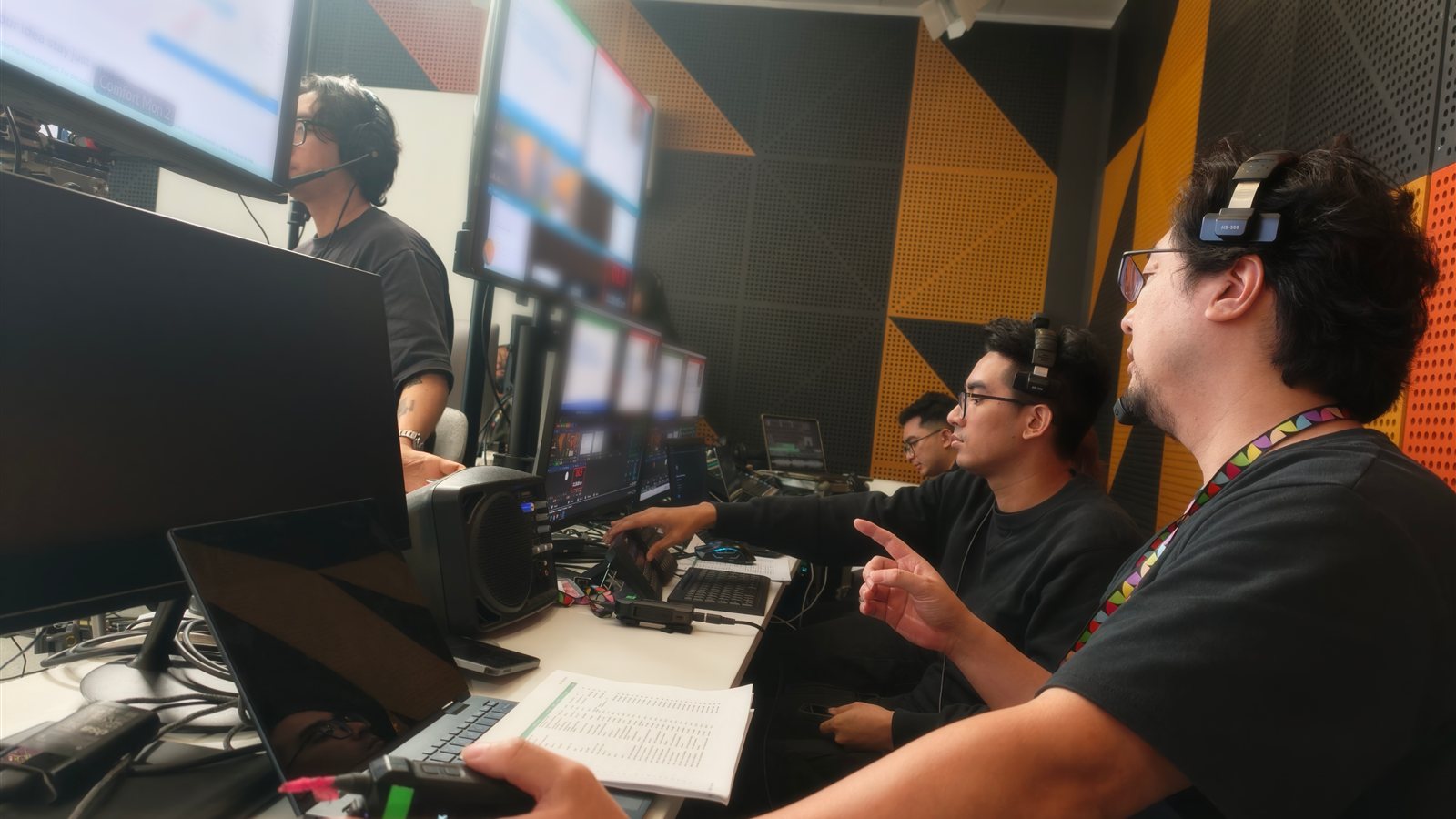
- Execution: We ran 6 live, broadcast-grade episodes with smooth multi-speaker switches, live prompting demos and speaker-audience interactions on the fly, keeping the audience chat lively and interactive.
- Numbers: We love seeing hard data match the hard work. Out of 6,500 total registrations, over 3,100 became active viewers across the live shows and recordings. That gave us an exceptional turn-up rate of up to 50% (which, if you know webinars, is a minor miracle), with many watching all the way to the last episode.
- Longevity: The impact didn’t stop when the “stream” stopped. We built a clean, evergreen video-on-demand (VOD) engine that continues to pull in traffic and help founders learn, long after the final episode wrapped.
The Challenge: From Prudence to Proof
In the six months leading up to early 2026, our partner had rolled out a massive wave of new AI tools and suite updates, from next-gen language models to advanced video and developer platforms. The only issue — startups were playing it incredibly safe. Caught between loud media noise and endless AI promises, cash-strapped founders preferred to stick with what they knew rather than risk precious resources experimenting on new tools.
To break through this collective skepticism, our partner couldn’t just drop new product announcements and promises. They needed to show, not tell. The challenge was to give the pragmatic budget-conscious founders undeniable proof: a clear, practical roadmap showing exactly how these new tools could cut their operational costs and help them build fast prototypes without breaking the bank.
Extra Considerations: From Pressure to Process
Getting the series off the ground meant figuring out a few tricky, behind-the-scenes puzzles that go way beyond just hitting the “Record” button:
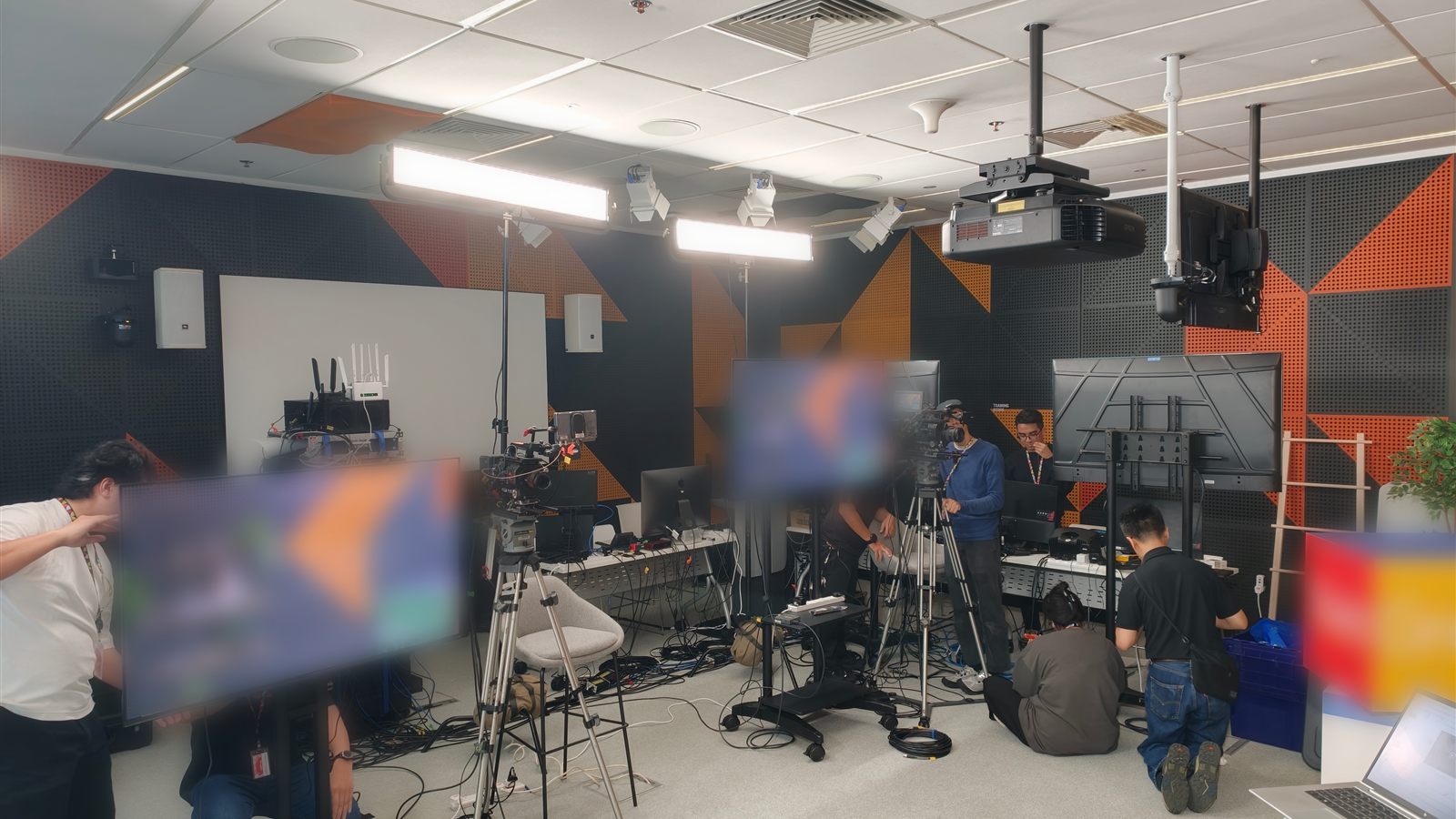
- The “Attention” Pressure: With today’s shorter attention spans, we knew this couldn’t be another passive lecture where people zoned out in the background. Founders needed to code, write prompts, and deploy web apps right alongside our speakers. To give the founders the help needed, we set up the studio so that the facilitator could see the comments from the audience live, tweak their demos and presentations to cater to the evolving questions of the audience, and answer questions spontaneously. We shook up the visual rhythm with interstitials — diversifying the show so that it didn’t feel like a draggy lecture.
- The “Attendance” Pressure: Founders are incredibly busy. Keeping them hooked across a 6-episode arc is a massive challenge. We focused on giving them a central narrative that they could follow over the 6 episodes, interactive activities, creating familiarity with the instructors and the “classroom” that would encourage them to come back the next day.
- The “Time” Pressure: Our partner was rolling out new AI tools faster than most people could keep up with. Our team had to quickly learn and keep abreast of all the new tools being released, so that all information presented pertaining to the tools were up-to-date at the point of broadcast. It was not one of those shows where you could “lock” the content three weeks in advance. We had to be flexible to content change until the last second before we hit the “Go Live” button.
Our Solution: From Promise to Project
“Project StreamAcademy” is the name we gave to the livestream production set up that we used to transform standard broadcasts into a high-trust digital classroom.
1. The “Classroom” Orchestration
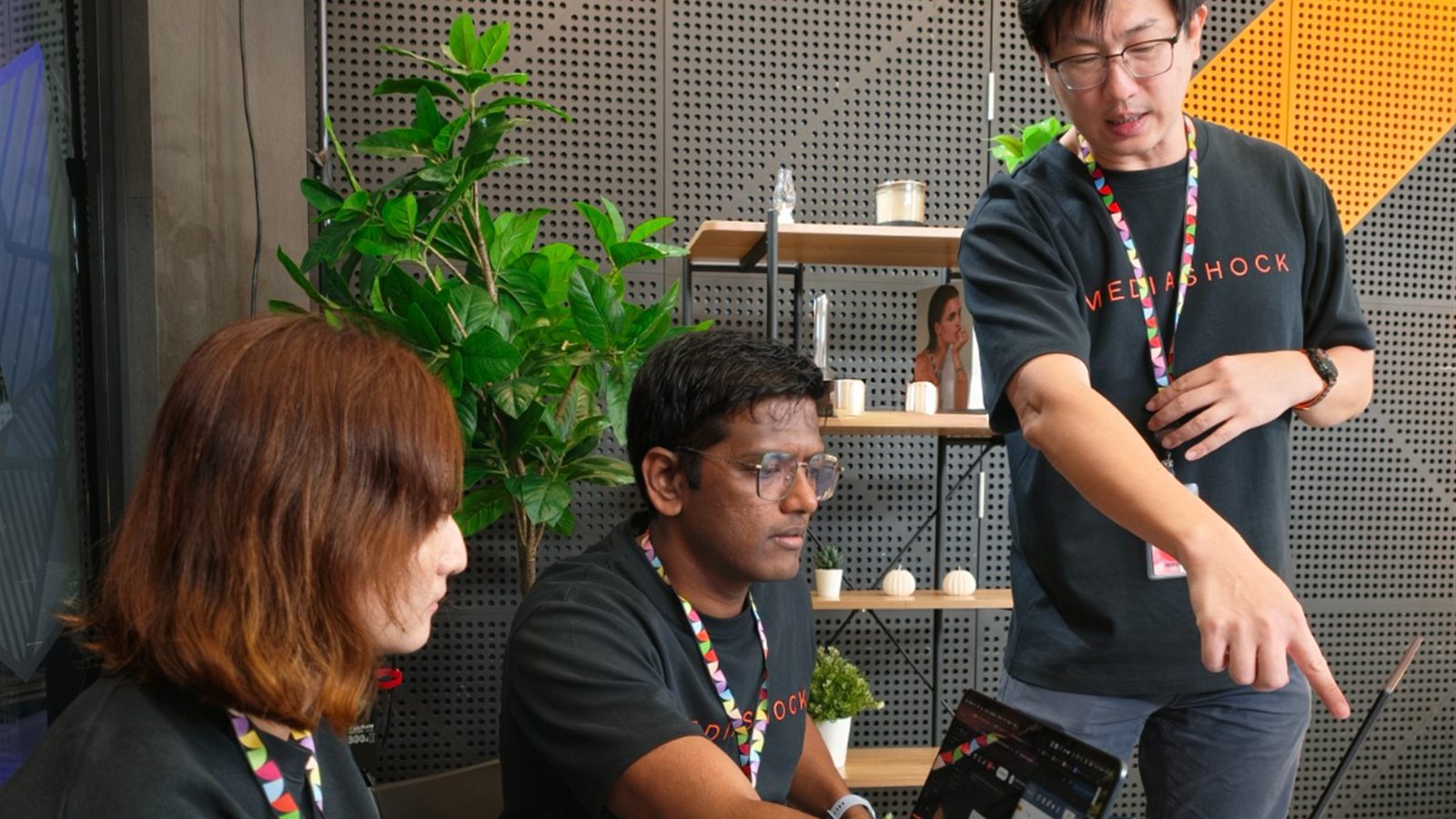
The art, look and feel, set up, infrastructure, direction and flow of the classes were made to feel like cozy places where the founders were just “hanging out” instead of attending a corporate event. We deployed a dual-stream studio infrastructure that embedded a live audience feedback loop directly into the facilitator’s view. This allowed the instructor to treat the presentation as a live “classroom” — shifting from live demos to spontaneous Q&As on the fly to maximize cognitive engagement.
2. The “Narrative” Orchestration
To secure long-term founder retention across a six-episode arc, we embedded a narrative into the curriculum so that the series felt like a seasonal masterclass rather than isolated tutorials. The series followed a continuous, cumulative narrative where founders iteratively built a complex prototype from scratch, reinforced by high-touch, community-first moderation that established a familiar, recurring classroom culture.
3. The “Workflow” Orchestration
To match the velocity of our partner’s rapid engineering sprints, we replaced static production locks with a just-in-time content ingestion workflow. Our team was able to review and implement content minutes before broadcast, relying on a resilient, flexible backend infrastructure engineered to absorb last-minute changes up to the second we went live.
How Content Choreography Makes Everything Come Together: From Program to Precision
To maintain the right energy across six episodes, we didn’t just wing it. We applied a precise Content Choreography routine rooted in adult learning theories, cognitive psychology, and narrative design.
We meticulously orchestrated the pacing and structure of the show around three psychological pillars:
1. Adult Learners & Cognitive Load Management
Adult learners require immediate relevance and autonomy. To prevent cognitive fatigue when teaching complex AI tools, conceptual explanations were followed by live prompting exercises. We strategically placed “cognitive breathers” — using custom transitions and casual Q&A pauses — to give founders the mental space to digest information before moving to the next technical layer.
2. The Zeigarnik Effect
To keep busy founders intellectually hooked across multiple weeks, we utilized psychological “open loops.” At the tail end of each episode’s build, we deliberately introduced a strategic technical cliffhanger — a teaser of the next architectural challenge or a complex bug left intentionally unsolved. This triggered the Zeigarnik effect (the human psychological tendency to remember uncompleted tasks better than completed ones), creating a cognitive itch that motivated founders to return for the next broadcast.
3. Active Reinforcement
To maximize long-term retention of volatile AI tools, we designed a deliberate spaced retrieval framework using highly structured bookends at the start and end of every single episode.
- The Opening Alignment: Each broadcast opened with a collaborative recap, some leveraging user assignment submissions from the founders to co-create a summary of the previous week’s mechanics.
- The Closing Reward Loop: Each episode concluded with an immediate synthesis of that day’s breakthrough.
Mirroring the principles of Reinforcement Learning, these dual-anchor recaps acted as positive feedback loops — validating what the founders had built, correcting misunderstandings in real time, and firmly anchoring the technical habits needed for rapid prototyping.
Results: From Promise to Proof
When the dust settled, we were thrilled to see that the project delivered exactly what we set out to prove. Here is a look at the actual impact and what went down behind the scenes:
- The Numbers (The Good Kind): The series pulled in 6,500 total registrations, which converted into over 3,100 viewers across the live shows and VOD recordings. Depending on which internal tracker you look at, that leaves us with an incredible up to 50% turn-up rate. Even better? Over 900 founders came back to watch multiple sessions, proving they were actually getting value from the series.
- Rolling with the Punches: If there’s one thing we pride ourselves on, it’s being agile when things get unpredictable. When the early project scope felt a little ambiguous, we jumped right in to help shape the content and flow. No matter how many times the requirements or setups shifted at the eleventh hour, our team stayed responsive and kept things moving forward.
- Keeping it Calm on Show Day: Live production loves to throw curveballs — like sudden illnesses or technical platform bugs right before going live. We focused on creating a supportive backstage environment so the team could feel comfortable and confident before stepping on stage. If we’re being completely honest and humble, the experience taught us a great lesson too: while our onsite execution completely proved our capabilities, we realized we can do an even better job of communicating that expertise early on to give our partners total peace of mind from day one.